

The First Responders Who Learned From the Plan That Failed (Hurricane Katrina Responders, USA)
Lesson: Systems fail. People improvise. Plans matter anyway.

The Levee Breaks (What?)
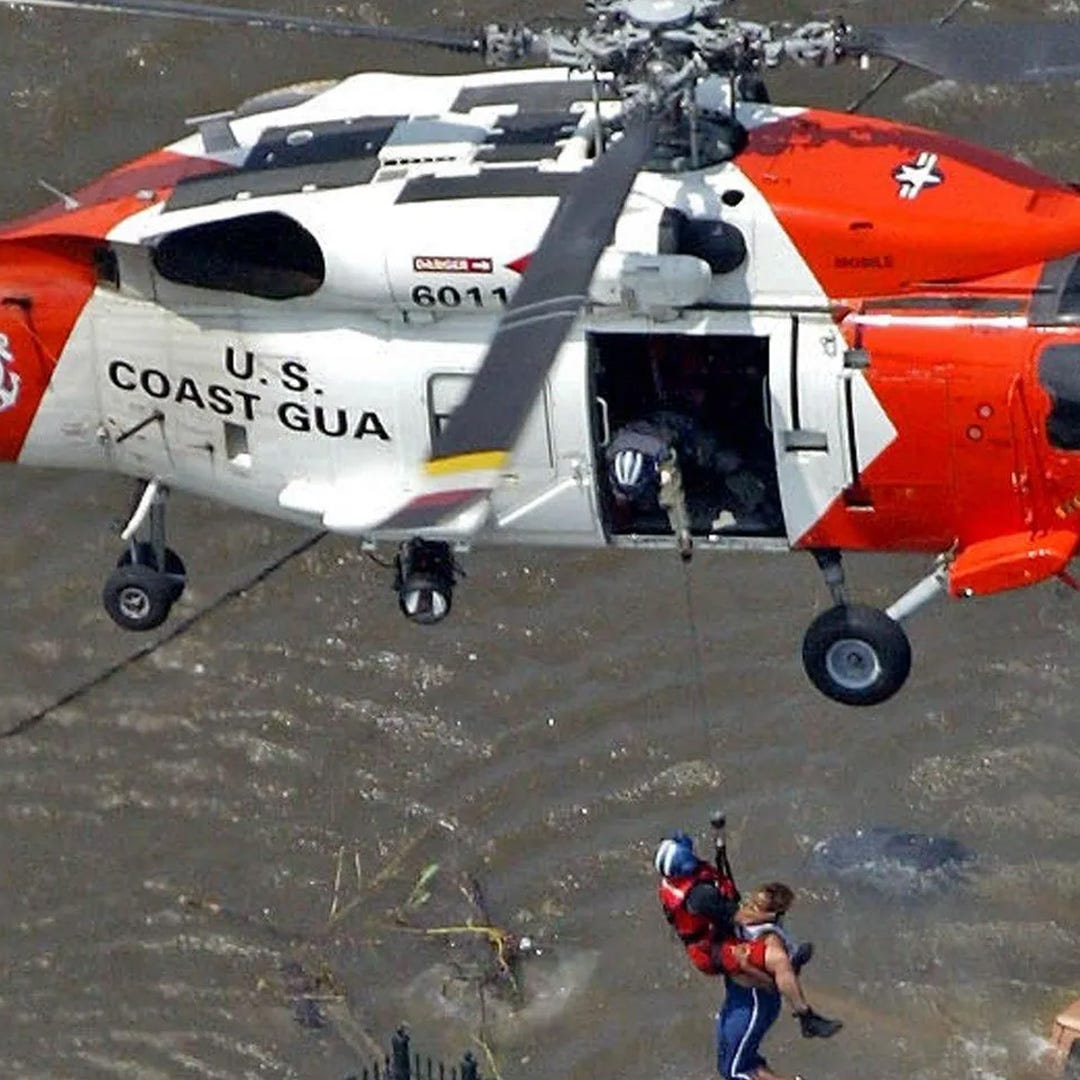
Hurricane Katrina made landfall near New Orleans on August 29, 2005, as a Category 3 storm. The wind was severe. The rain was torrential. The real catastrophe came not from the storm itself but from the failure of the system designed to protect the city from the water. The levees failed. Multiple breaches opened in the protective barriers that surround New Orleans on three sides. Water poured into the city. Within hours, approximately 80 percent of New Orleans was flooded.
The federal government, the state of Louisiana, and the City of New Orleans had prepared for this moment. There were evacuation plans. There were disaster response protocols. There were chains of command, emergency shelters, communication systems, and federal disaster aid procedures. All of it failed. The plans assumed capacity that did not exist. The chains of command broke. The communication systems did not function. The shelters were inadequate. The federal response was slow and fragmented. FEMA, the Federal Emergency Management Agency, was supposed to coordinate the federal disaster response. FEMA was unprepared and overwhelmed. The state government was unprepared and overwhelmed. The city government, under Mayor Ray Nagin, was unprepared and overwhelmed.
The water kept rising.
By August 30, the morning after the storm hit, it was clear to everyone involved that the formal systems designed to protect the city and respond to disaster had collapsed. The people responsible for those systems—federal officials, state officials, city officials—had no coherent plan for what to do next. The rescue operations that would eventually save more than 33,000 people were not coordinated by those officials. They emerged from the improvisation of people operating outside the formal system, using boats and helicopters and helicopters and the fundamental human impulse to save the people who were drowning.
The Coast Guard and the First Responders (So What?)
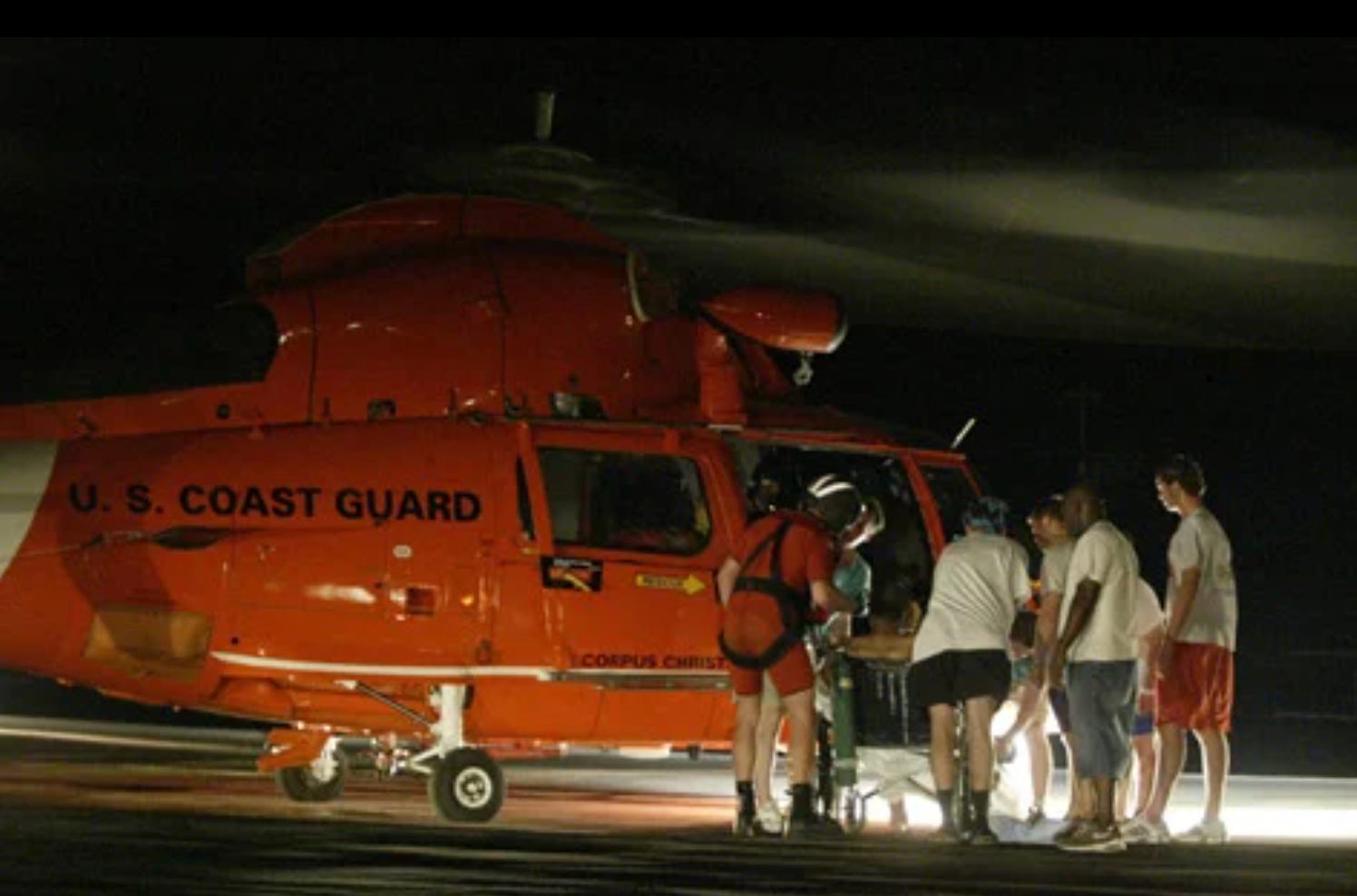
The United States Coast Guard is a military service with the mandate to conduct rescue operations in American waters. When Hurricane Katrina hit, the Coast Guard had pre-positioned personnel and equipment in Louisiana. As soon as the storm passed and the extent of the flooding became clear, the Coast Guard began flying helicopter rescue missions. The Coast Guard missions began on August 29, the morning of and immediately after the storm. They continued for weeks.
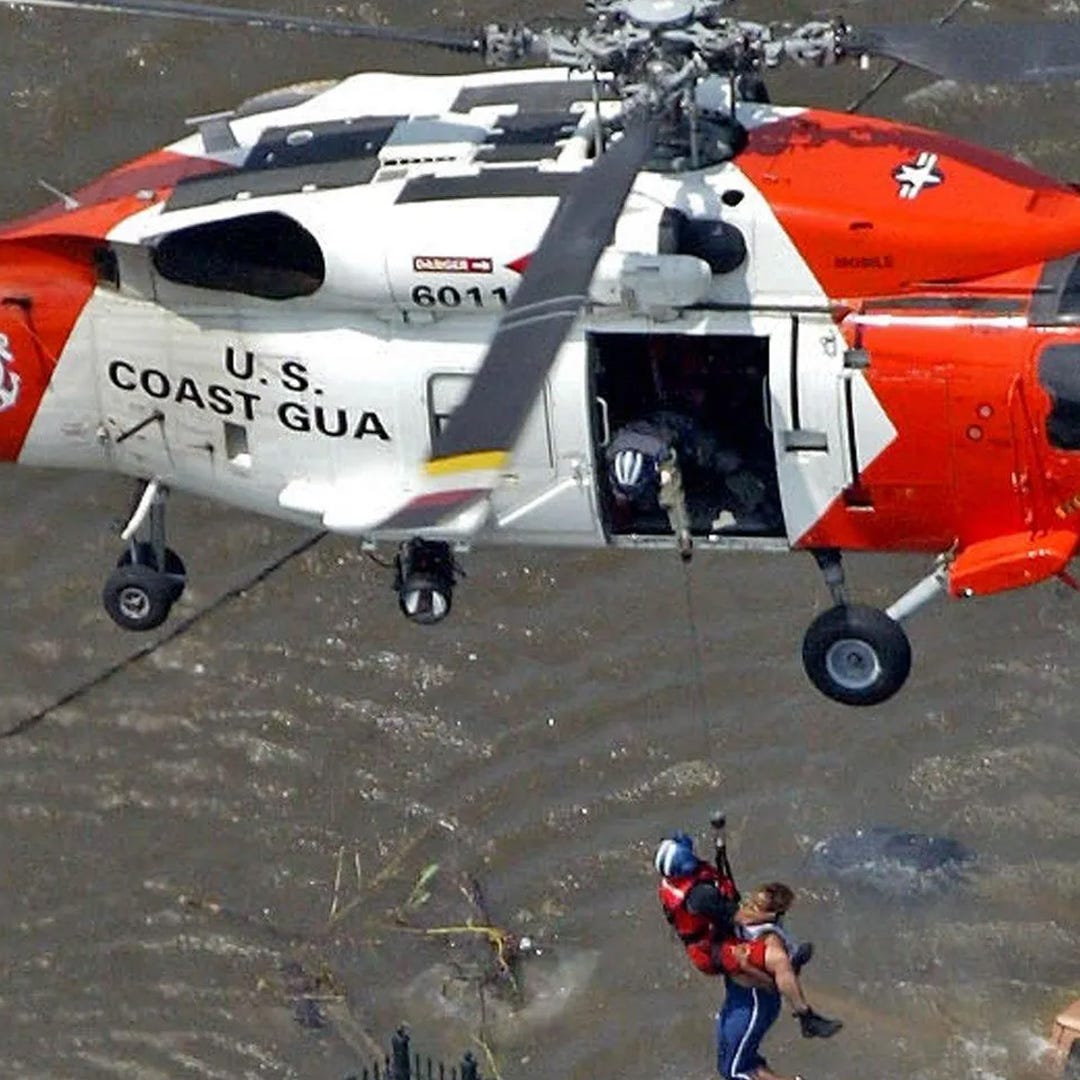
The operational record is preserved in multiple after-action reports and congressional investigations. The Coast Guard rescued more than 33,500 people from the New Orleans area, according to official counts — 24,135 rescued from peril and 9,409 medical patients evacuated to safety. The number is staggering. Of the estimated 60,000 people left stranded by the storm, the Coast Guard saved more than half. The logistics of conducting those rescues—identifying people stranded on rooftops, deploying helicopters to extract them, flying them to dry land or to larger vessels—required a coordination that had not existed before the disaster and was being invented in real time.
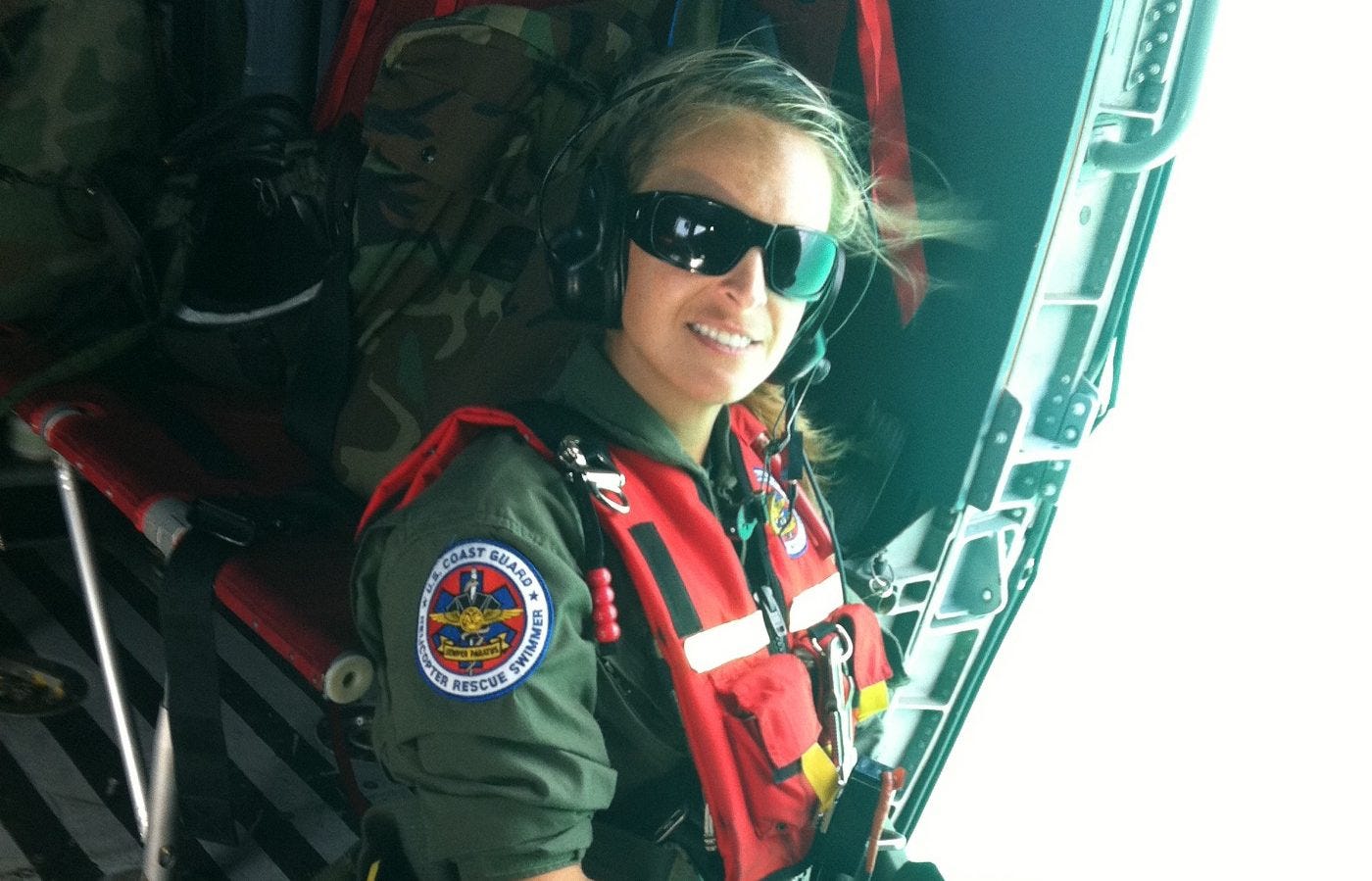
Aviation Survival Tech Petty Officer 1st Class Sara Faulkner (AST1)
Aviation Survival Technician First Class Sara Faulkner was a Coast Guard rescue swimmer, the first woman to graduate from the Coast Guard’s Rescue Swimmer School. During Katrina, she was the only female rescue swimmer working the disaster. Her aircrew rescued 48 people in a single night. Congressional investigations and after-action reports documented accounts from leaders like Faulkner, and the interviews reveal a pattern: they had training in rescue operations. They had helicopters and boats. They had no comprehensive command structure above them telling them where to go or what to do. So they made decisions. They saw water. They saw people on roofs. They flew the helicopter to the roof. They extracted people desperate for help. They went back…again and again and again, for days, without a central directive about priorities or resource allocation or strategy.
The success of the Coast Guard rescue operation wasn’t the result of a plan. The plan for disaster response had failed. The success was the result of people with training and equipment making real-time decisions about what needed to be done next. The success was the result of improvisation built on discipline. You cannot improvise rescue operations unless you have trained personnel who understand how to operate a helicopter, how to execute a water extraction, how to manage the risk of personnel in difficult conditions. But the plan for how to do all of this at scale, across an entire city, in the context of a massive disaster, didn’t exist.
The same pattern repeated on water. Civilian boat owners from outside the flooded area arrived and began operating informally as rescue vessels. They came from Mississippi, from Texas, from Louisiana. They were not formally coordinated. They were not part of any official response structure. They were called the “Cajun Navy” by the media, and the name stuck because it perfectly captured what they were: a spontaneous, voluntary, loosely coordinated fleet of people with boats showing up to save people they did not know from a disaster that had not been their responsibility to prevent.
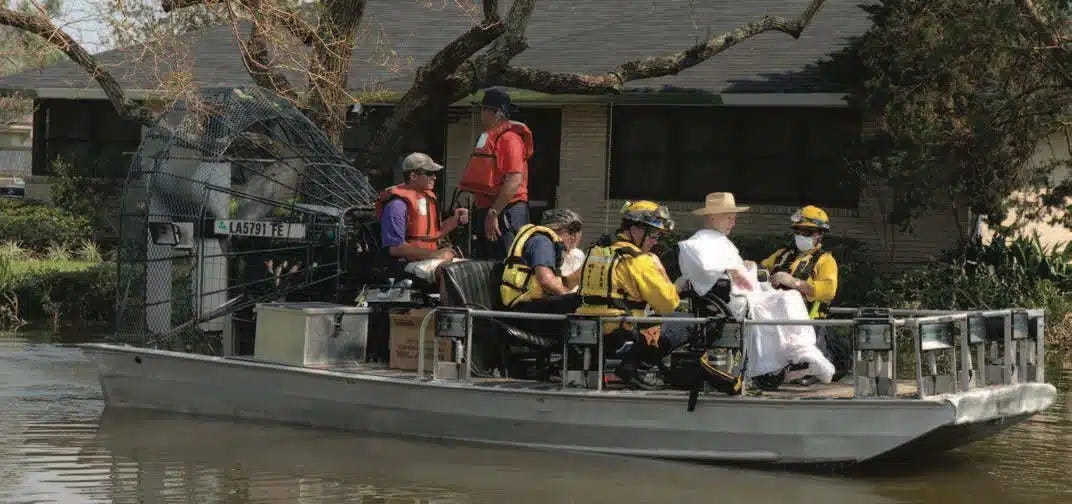
The Cajun Navy is credited with rescuing more than 10,000 people from flooded homes and rooftops. The movement began when Louisiana State Senator Nick Gautreaux of Abbeville watched the destruction on television on August 31 and called for boat owners to gather at the Acadiana Mall in Lafayette. He expected twenty-five boats. Between 350 and 400 showed up. What rolled out of Lafayette the next morning was an eight-mile convoy. These were not trained rescue personnel. These were people with boats and the decision that they could help. And they did.
The Hospital and the Hard Choices (So What?)
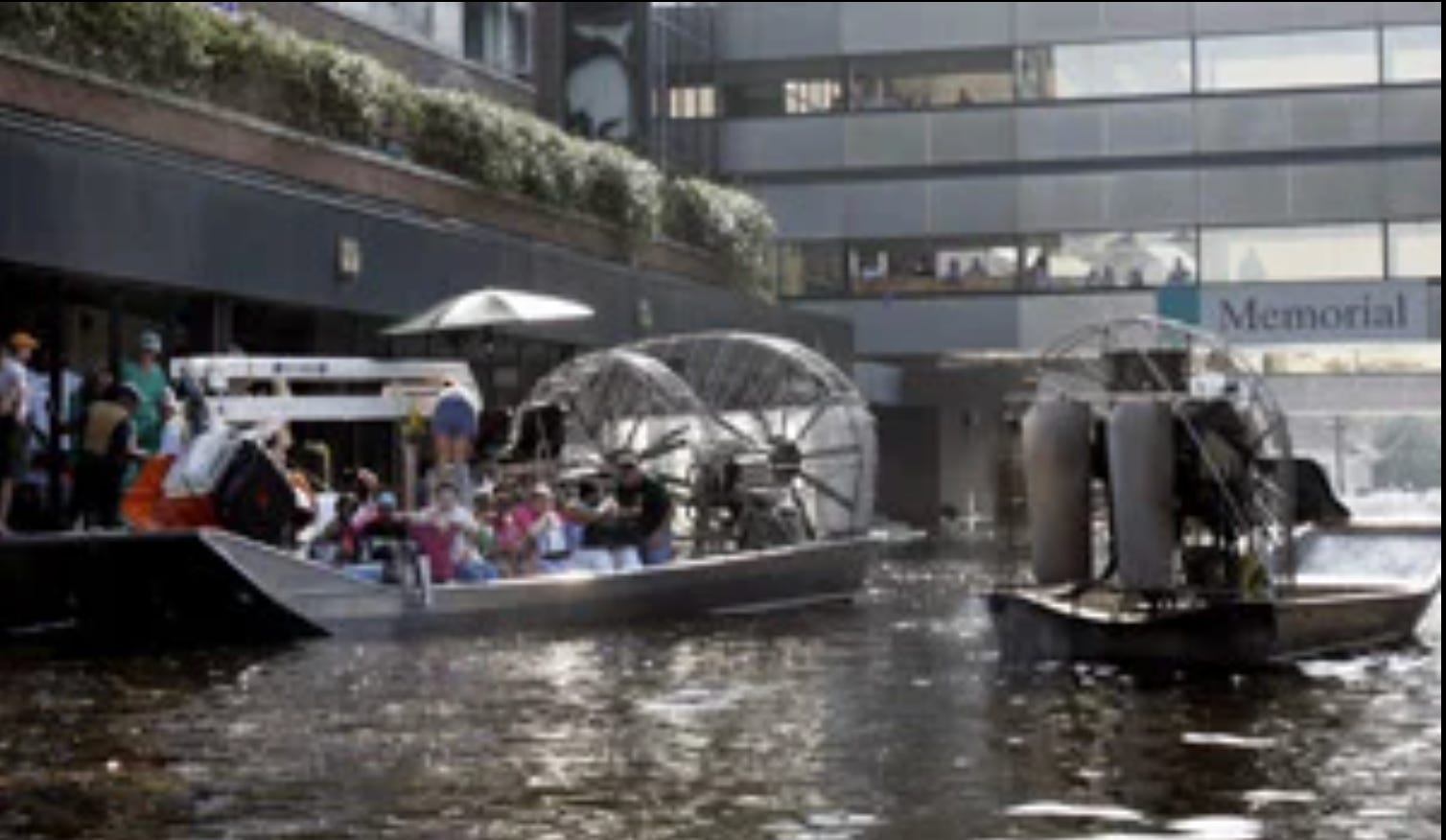
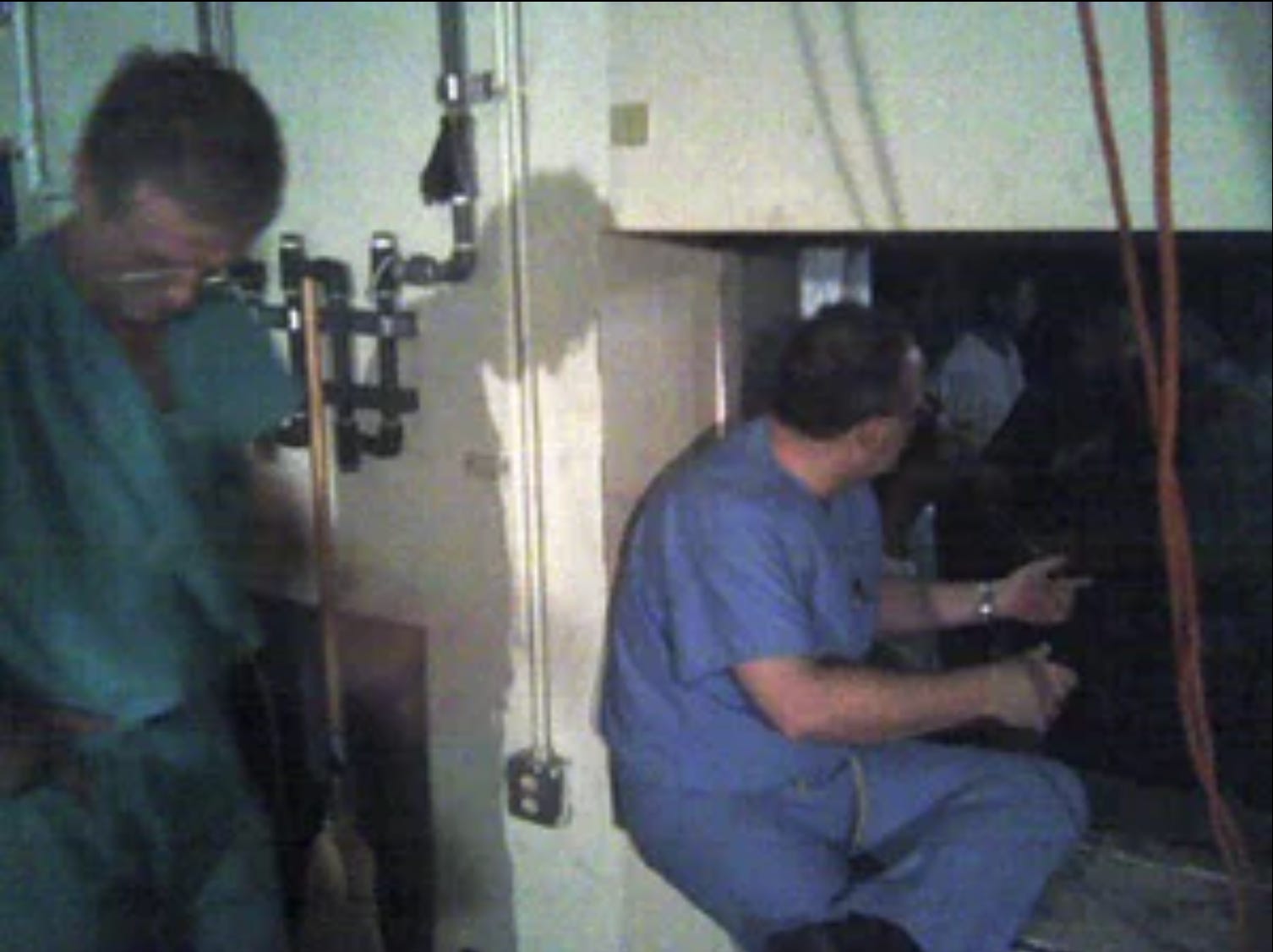
The systemic failure extended to every institution that should have been functioning. Memorial Medical Center, a major teaching hospital in New Orleans, had backup power systems designed to function in emergencies. After the levee breaches, the hospital lost power, and the backup systems failed. The hospital had no air conditioning, no refrigeration, no functioning elevators, no reliable water. Patients and staff were trapped in the dark, in extreme heat, in conditions approaching those of a refugee camp.
Approximately 2,000 people — patients, staff, and their family members — were inside the hospital when the power failed. The emergency operations plan assumed that outside help would arrive quickly. Help did not arrive quickly. The hospital did not have adequate supplies for 2,000 people for more than a few days. Food ran out. Water ran out. Medical supplies ran out. Indoor temperatures reached 110 degrees. Susan Mulderick, a nursing director serving as the rotating emergency-incident commander designated for the hurricane, was in charge of directing hospital operations. Dr. Richard Deichmann, the medical department chairman, organized the physicians.

Dr. Anna Pou
Dr. Anna Pou, an associate professor from LSU Health Sciences Center, was among the doctors who remained with patients from before landfall on August 29 through Thursday, September 1. Together, the staff made decisions in real time about triage, about who would receive limited supplies, about how to maintain basic sanitation and care in conditions that made that nearly impossible.
The hospital was not equipped to be a shelter. It was not designed to feed 2,000 people with no power. The plan assumed that would not be necessary. The plan failed. And the people inside the hospital—doctors, nurses, administrators, support staff—invented a response anyway. They coordinated among themselves. They rationed supplies. They established makeshift sanitation facilities. They maintained order and decorum in conditions that would have justified panic. They waited for rescue and organized their own survival while waiting.
The civilian rescues that eventually evacuated people from Memorial Medical Center came from outside the hospital’s formal structure. Coast Guard helicopters landed on the hospital roof. Civilian boats pulled up to the windows on the upper floors. The evacuation of 2,000 people from an unsecured, non-functioning building required improvisation and coordination that had to be invented in the moment.
The Pattern and the Lesson (So What?)
Here is what the disaster revealed: the systems designed to prevent catastrophe can fail completely. The levees were designed to prevent the flooding. They failed. The emergency response system was designed to manage the disaster. It failed. The hospital’s backup systems were designed to maintain operation. They failed. The federal government’s disaster response apparatus was designed to coordinate rescue and relief. It was slow and inadequate. None of the plans worked the way they were supposed to work.
And yet thousands of people were rescued. Thousands of people survived. The survival was not because the plans worked. It was despite the plans having failed. It was because people with training, with access to boats and helicopters, with the authority to make their own decisions, chose to act without waiting for central coordination. It was because the system’s failure created space for people to respond outside the system.
This creates a paradox. The institutional failure was catastrophic. People died because the systems failed. More people would have died if the improvisation had not occurred. But neither fact invalidates the other. The lesson is not that planning is worthless. The lesson is that planning only matters if it is designed to make improvisation possible.
The Coast Guard succeeded not because they had a perfect plan for evacuating a flooded city. They did not. They succeeded because they had trained personnel, distributed equipment, and the authority to make local decisions. When the central plan failed, those elements allowed them to maintain operation at the level of individual missions. When the central coordination broke down, the training was still in place. When the formal system did not work, the discipline was still in place.
The civilian boat operators succeeded because there was no plan requiring them to do anything. They came voluntarily, with boats they owned, following no command structure. They were the purest form of improvisation. But their improvisation only became rescue operations because people in other parts of the system—the Coast Guard, the National Guard, some local officials—recognized them as legitimate, gave them routes and targets, prevented them from getting in each other’s way, and generally created space for spontaneous action to be channeled into structured effect.
The hospital staff survived because they had training, because they had each other, because they had the discipline of a professional environment that even in breakdown continued to operate at the level of actual care for actual people. Mulderick and Deichmann and Pou did not invent hospital administration on August 30, 2005. They implemented it, in catastrophic conditions, because they had been trained to do so. When forty-five bodies were later recovered from Memorial — the largest number from any hospital in New Orleans — the impossible choices made inside that building became the subject of investigations and a grand jury. The decisions made under duress were not clean. They never are. But the staff stayed.
The pattern that emerges is this: planning creates the capacity for intelligent improvisation, but planning cannot account for every contingency. The value of planning is not in the plan’s accuracy. The value is in creating structures, training, and distributed authority that allow people to maintain function when the plan breaks down. Plans fail. People improvise. But people can only improvise effectively if they have been disciplined by prior planning.
The Cost of the Failure (So What?)
The improvisation saved thousands of people. It did not prevent an estimated 1,400 to 1,800 deaths from Hurricane Katrina, depending on the source and method of counting. Many of those deaths were preventable. They were the result of system failures that could have been prevented with better planning, better equipment, better governance. The levees were known to be inadequate. Engineers had warned about the vulnerability. The funds to repair and upgrade the levees were not appropriated. Federal disaster response capability was degraded. The city’s evacuation plan assumed resources and cooperation that did not exist.
The congressional investigation, particularly the work of the House Committee on Science and the Senate Committee on Homeland Security and Governmental Affairs, documented the failures in granular detail. The investigation made clear that the disaster itself—the hurricane, the levee failure—was not preventable. The response failure was preventable. Better planning, better investment, better governance would have reduced the death toll. The fact that improvisation saved many people does not erase the fact that better systems would have saved more.
And yet the improvisation occurred. The Coast Guard personnel got in their helicopters and flew into a disaster area. The civilian boat owners drove their boats to a flooded city. The hospital staff maintained order and care in impossible conditions. They did what could be done when what should have been done had not been done.

The Discipline of Preparedness When Systems Fail (Now What?)
The lesson from Katrina for anyone in a leadership position is embedded in the paradox: you must plan knowing your plan will fail. The discipline is not in the perfection of the plan. The discipline is in building the capacity for intelligent response when the plan breaks.
This means several things. First, invest in training. The Coast Guard could respond to Katrina because it had personnel who had been trained in rescue operations. They did not invent rescue swimming on August 29, 2005. They implemented training developed over decades. When the formal system failed, the training persisted.
Second, distribute authority. The Coast Guard units operating in the New Orleans area had the authority to make decisions about where to deploy their helicopters, who to extract, what order to prioritize. They did not have to call Washington for approval for each mission. The decision authority was distributed to the people with the information and the capability to act. When the central command failed—and it did—the local authority allowed operations to continue.
Third, create redundancy. The Coast Guard had distributed equipment throughout Louisiana. It had personnel positioned in multiple locations. When some systems failed, others remained operational. The civilian boat operators provided redundancy to the formal rescue system. When FEMA did not show up with organized rescue operations, the boats arrived anyway.
Fourth, anticipate that the official system will not be adequate. The plan should be built with the assumption that at some point, it will be overwhelmed or broken. Plan for what you will do in that condition. What is the minimum viable operation? What decisions can be made at the local level? What resources can be distributed now such that they will be available when central coordination is impossible?
Fifth, invest in the unglamorous elements that enable improvisation. Training is unglamorous. Distributed authority requires giving up centralized control. Redundancy means duplicating resources that are only needed if something fails. In times of plenty, investments in preparedness look like waste. In times of crisis, they look like salvation.
Mayor Nagin was heavily criticized for the city’s response to Katrina. His criticism was justified. The city government was not adequately prepared. The evacuation plan was inadequate. The coordination with state and federal authorities was chaotic. These are legitimate criticisms. But the lesson is not that Nagin was incompetent. The lesson is that the system was not built with the capacity to tolerate its own failure.
The Coast Guard rescued more than 33,500 people because it had been built with the assumption that normal systems would fail. It had redundant command structures. It had distributed authority. It had trained personnel with the authority to make local decisions. When the normal system failed—when communication with higher authority was difficult, when coordination with other agencies was impossible—those elements allowed rescue operations to continue.
The civilian boat operators showed what happens when people decide to act without waiting for permission or coordination. Some of those operations were dangerous. Some were inefficient. But they happened because people decided the emergency superseded the normal requirement for formal authorization. And they saved lives.
This is the pattern that Katrina reveals. Plan for failure. Prepare for the moment when the plan will not work and you will have to improvise. Give people the training, authority, and resources to improvise effectively. And then recognize that when the moment comes—and it will come—your best people will be the ones who can think beyond the plan and act outside it while still maintaining the discipline the plan created.
The system failed. The people did not. And the people only did not fail because years of preparation, training, and investment had created the capacity for improvisational response. The plan did not save the city. But the plan created the conditions that made it possible for people to save each other.
Sources
U.S. House of Representatives, A Failure of Initiative: Final Report of the Select Bipartisan Committee to Investigate the Preparation for and Response to Hurricane Katrina (2006). Government Printing Office. govinfo.gov
United States Coast Guard, After Action Report: Hurricane Katrina Response Operations (September 2005). Official operational records documenting rescue of more than 33,500 persons (24,135 rescued from peril, 9,409 medical patients evacuated). National Coast Guard Museum
Sara Faulkner oral history interview, October 4, 2005. Coast Guard Historian’s Office. OCLC ArchiveGrid
Sheri Fink, “The Deadly Choices at Memorial,” ProPublica / New York Times Magazine (August 2009). Documentation of Memorial Medical Center conditions, the roles of Susan Mulderick, Dr. Richard Deichmann, and Dr. Anna Pou, and the recovery of 45 bodies. ProPublica
“The Cajun Navy,” originating with State Senator Nick Gautreaux’s call to boat owners, August 31, 2005. Background in Douglas Brinkley, The Great Deluge: Hurricane Katrina, New Orleans, and the Mississippi Gulf Coast (William Morrow, 2006). Cajun Navy Wikipedia
PBS Frontline, “Storm That Drowned a City” (2005). Interviews with FEMA officials, National Guard personnel, civilian rescue operators, and hospital staff.
John McQuaid and Mark Schleifstein, Path of Destruction: The Devastation of New Orleans and the Coming Age of Superstorms (Little, Brown, 2006).